 OX
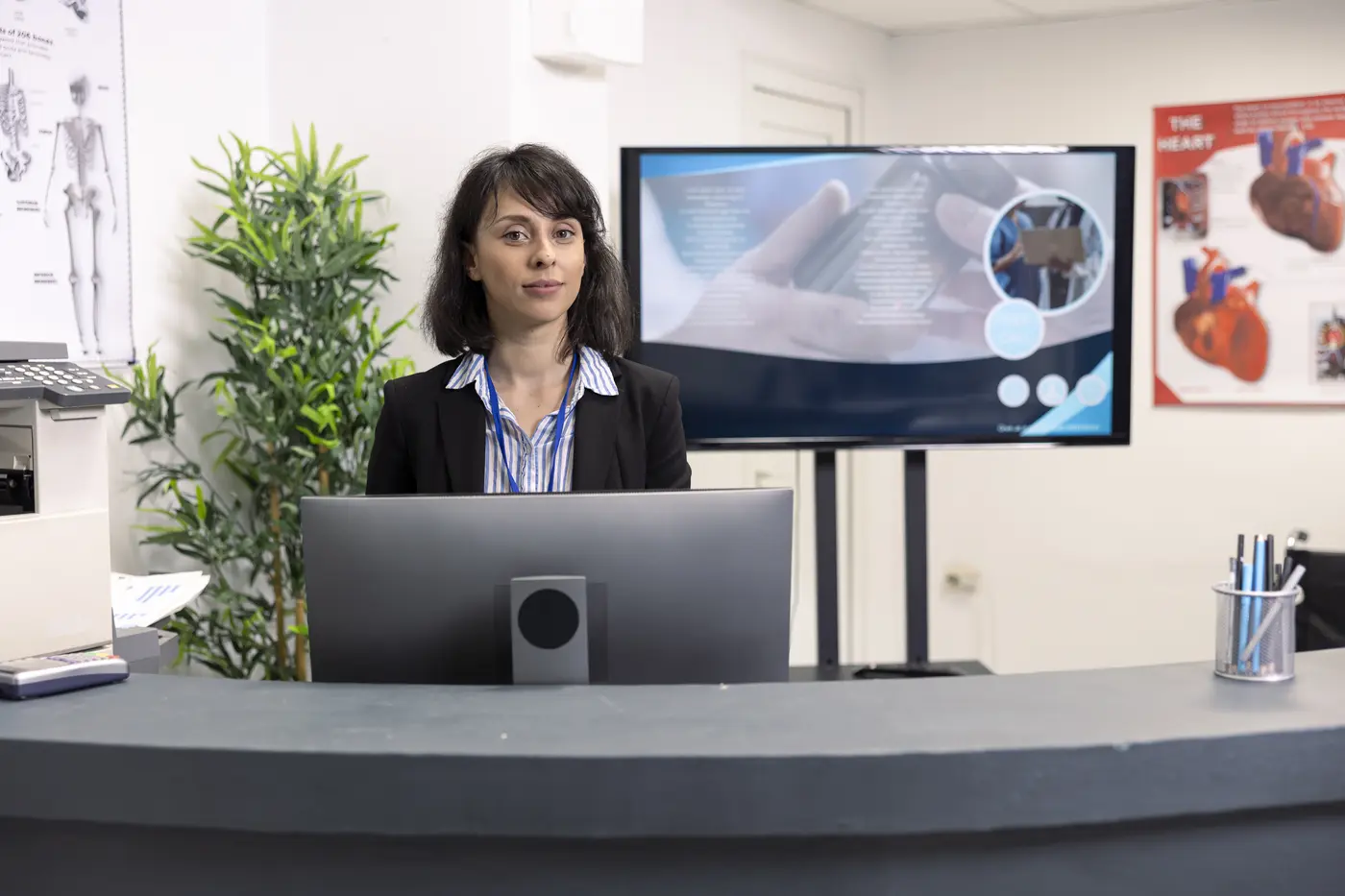
It’s a fair question and it deserves an honest answer rather than a slogan. So here’s how we see it, after watching a lot of assistants at work in clinics, offices and shops.
What a receptionist really does
If you’ve ever worked on reception, or have someone on yours, you know the job is much more than answering questions. It’s welcoming people, calming down someone who arrives nervous, sorting out the diary when someone runs late, taking payments, dealing with suppliers, remembering that the lady who comes on Thursdays prefers the first slot of the day and knowing when a patient needs someone to give them five more minutes.
A chatbot does none of that, and it doesn’t try to.

What a chatbot does do
An assistant on your website takes care of one very specific part: the repeat questions that arrive in writing and simple appointments. Opening hours, a rough price, whether you do a particular thing, where the clinic is, where to park. And it does it at any hour, including nine o’clock on a Sunday evening, when there’s nobody there.
Those are exactly the questions that interrupt reception the most. Every call to ask about opening hours cuts into something else, perhaps looking after the person standing at the desk.
What happens in practice
When a business puts a chatbot on its website, reception doesn’t disappear; its focus changes. It gets fewer calls asking the same old things and more contacts that arrive already filtered, with a name, a phone number and what they need. Simple appointments go straight into the diary, and whoever runs reception spends their time on what needs judgement and a personal touch.
A good assistant also knows when to stop. If someone is upset, has a complicated case or simply prefers to talk to a person, the conversation goes to the team. And whoever picks it up has the whole conversation in front of them, so they don’t have to start from scratch.
So why is it scary?
Because technology has changed a lot of jobs, and it’s natural to wonder whether yours is next. But in customer-facing work there’s something that can’t be automated: trust. People want to sort out simple things quickly and on their own, and they want a person for the important things. A chatbot takes care of the first so there’s more time for the second.
How we approach it at OX·IA
At OX·IA we designed the assistant with exactly this in mind. It answers the repeat questions with the information on your website, books appointments into your calendar and, when someone wants to talk to a person, alerts your team and hands the conversation over, with the name and photo of whoever takes it, within the hours you set. Outside those hours, it explains this to the visitor and offers to take their details so you can call them back.
It isn’t there to replace anyone. It’s there to take the pointless interruptions off your reception desk.